
How to Stop Ruminating on Past Mistakes: A Compassionate Guide

Updated: 1 hour ago
What if moving forward from a mistake doesn’t mean pretending it didn’t matter? If you’re searching for how to stop ruminating on past mistakes, you may already know how exhausting the replay can be. A conversation or decision returns to mind, and you wonder what you should have done differently. Replaying it can affect sleep, focus, and your ability to be present. Shame can also make one regretted action feel like a definition of who you are.
The aim isn’t to dismiss the impact or excuse yourself. It’s to understand what happened, take responsibility where you can, and stop treating self-punishment as proof that you care. This guide explains how to distinguish useful reflection from rumination, then consider whether an apology or another form of repair is appropriate.
You’ll also find practical ways to respond to recurring thoughts with perspective and self-compassion, and to reconnect with the present. If the cycle continues to disrupt daily life, individual psychotherapy can provide a collaborative space to explore thought patterns and develop coping strategies tailored to your needs.
Table of Contents
Why do I keep ruminating on past mistakes?
Regret can linger long after an event is over. You may replay what you said, reconsider a decision, or wonder whether one moment revealed something deeply flawed about you. This can feel unsettling when you want to learn from what happened but can’t reach a clear conclusion.
Rumination is repetitive thinking that’s difficult to disengage from. It circles an event and its possible meanings without moving toward resolution. The Rumination (psychology) overview describes how this pattern is discussed in relation to mental health. Regret itself can point to something you value, such as honesty or care for another person. But replaying the event isn’t the same as learning from it, and self-criticism alone doesn’t ensure that useful change will follow.
Reflection moves toward insight; rumination repeats the question without bringing you closer to an answer. Recognizing the difference can help you understand how to stop ruminating on past mistakes without dismissing their impact or avoiding accountability.
What rumination about a mistake can feel like
You might mentally replay a conversation, imagine every alternative choice, or scrutinize your character because of something you did. Shame, guilt, worry, and embarrassment can overlap, but they aren’t identical: guilt often focuses on an action, shame on the self, worry on what might happen, and embarrassment on feeling exposed or awkward.
For some people, this loop makes it harder to concentrate, sleep, stay present in relationships, or manage daily responsibilities. The effects vary. Struggling with one or more of them doesn’t mean you’re failing to cope.
Why the mind returns to something that already happened
The mind may revisit a painful event while trying to find certainty, understand its meaning, or prevent a similar mistake in the future. Yet repeated review can’t make the past fully certain. Unanswered questions, imagined alternatives, and harsh judgments such as “I’m a terrible person” can keep your attention fixed on the event instead of helping you identify what, if anything, can be learned or repaired.
Recurring thoughts by themselves don’t establish OCD or another diagnosis. They can occur for different reasons and need to be understood in the context of your experiences and overall wellbeing. If the pattern is distressing or persistent, consider exploring it with a mental health professional.
How to interrupt rumination without denying what happened
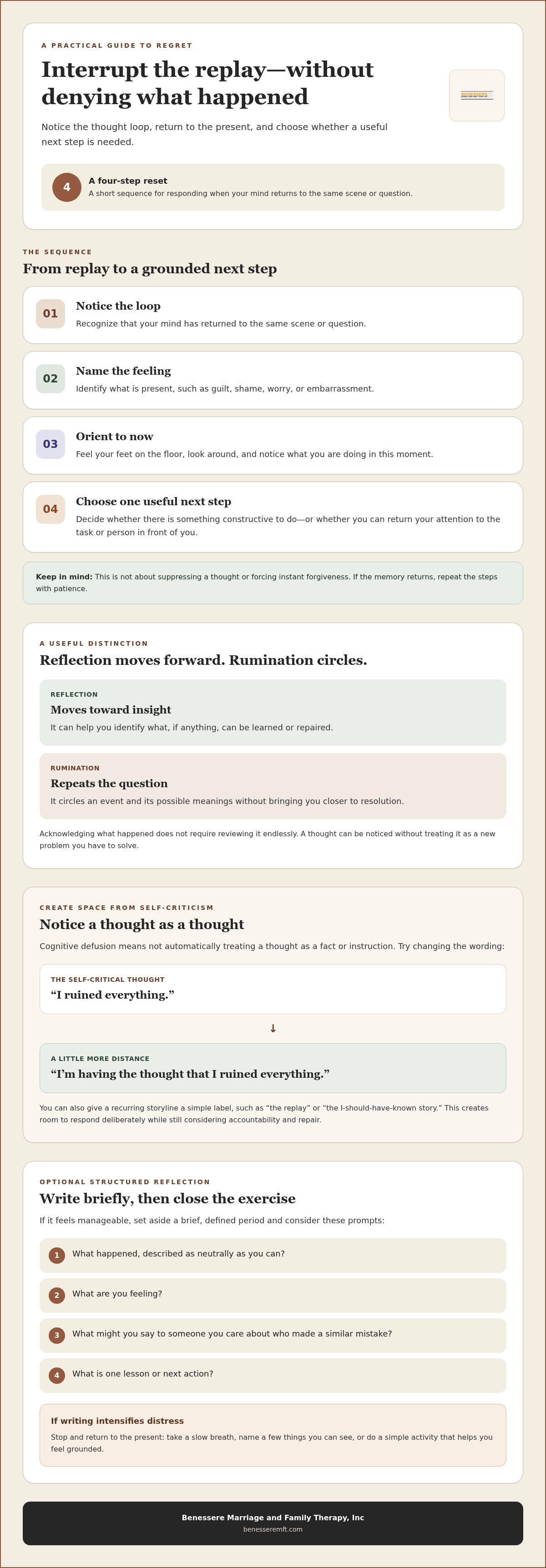
Interrupting a thought loop isn’t the same as pretending the mistake was harmless. You can acknowledge what happened without reviewing it endlessly. A thought can be noticed without treating it as a new problem you have to solve.
Try this short sequence when you notice yourself replaying the event:
Notice the loop: Recognize that your mind has returned to the same scene or question.
Name the feeling: Identify what’s present, such as guilt, shame, worry, or embarrassment.
Orient to now: Feel your feet on the floor, look around, and notice what you’re doing in this moment.
Choose one useful next step: Decide whether there’s something constructive to do or whether you can return your attention to the task or person in front of you.
This isn’t about suppressing a thought or forcing instant forgiveness. If the memory returns, repeat the steps with patience. Harvard Health Publishing offers additional approaches in Break the cycle of rumination, including ways to shift attention and settle the body.
Use cognitive defusion to create space from self-critical thoughts
Cognitive defusion means noticing a thought as a thought, rather than automatically treating it as a fact or instruction. For example, change “I ruined everything” to “I’m having the thought that I ruined everything.” You might also give the recurring storyline a simple label, such as “the replay” or “the I-should-have-known story.”
The aim isn’t to argue with every imagined detail or dismiss harm. If your actions affected someone, you can still consider accountability and repair. Defusion creates space to respond deliberately instead of letting self-judgment dictate what happens next. For those seeking structured guidance to reframe repetitive thought cycles, working with Carl James Resolve-Coaching offers life coaching and NLP techniques designed to help clients move past personal challenges.
Try self-compassion and structured reflection
If it feels manageable, set aside a brief, defined period to write about the event. Note what happened as neutrally as you can, what you’re feeling, and what you might say to someone you care about who made a similar mistake. End by naming one lesson or next action, then close the exercise rather than continuing to search for certainty.
Writing is optional. If it intensifies distress, stop and return to the present: take a slow breath, name a few things you can see, or do a simple activity that helps you feel grounded. Learning how to stop ruminating on past mistakes can take practice. Individual psychotherapy can also provide a collaborative space to understand recurring thought patterns and explore coping strategies suited to your experiences. Learn about individual psychotherapy.
Should you apologize, make amends, or let the mistake rest?
Regret can prompt a useful question: is there something respectful and constructive to do now? The answer depends on what happened, who was affected, what would support their wellbeing, and whether contact would be welcome and safe. Use this framework to distinguish action from replay.
Taking responsibility for a behavior is different from condemning your whole identity. “I handled that conversation poorly” leaves room to understand the impact and choose differently. “I’m a terrible person” turns an action into a permanent verdict, which can deepen shame without helping anyone.
When an apology or practical repair may be appropriate
Ask what effect your action had, then consider whether a specific repair is possible. An accountable apology names what you did, recognizes the impact, and avoids excuses. For example: “I interrupted you and dismissed your concern. I’m sorry. I’ll listen without cutting you off.” Don’t add pressure for reassurance or immediate forgiveness. The other person gets to decide how to respond.
Contact isn’t always the right form of repair. If reaching out could cause harm, intrude on someone’s privacy, or violate a stated boundary, respect that limit. Accountability can include changing your behavior without asking the affected person to participate.
When the next step is learning and letting the question rest
If no constructive action remains, identify what you’d do differently if a similar situation arose again. You may not be able to establish every detail or know exactly what another person thought. More replay can’t guarantee that certainty.
If you find yourself repeatedly checking, reviewing, or seeking reassurance, notice whether each round brings new information or briefly reduces distress before doubt returns. This pattern may be worth discussing with a mental health professional. Clarifying whether to act, learn, or let the matter rest can be one practical part of how to stop ruminating on past mistakes.
How to respond when rumination returns
A familiar thought returning doesn’t mean you’ve lost the progress you’ve made. Old regrets can resurface during quiet evenings, after a stressful interaction, or when something reminds you of the event. A trigger may offer context, but it doesn’t automatically mean there’s a new problem to solve.
Use a brief response plan to meet the thought without letting it take over:
Recognize the trigger: Notice what was happening just before the replay began, without assuming you’ve found the only cause.
Label the loop: Gently identify it as rumination or as a familiar self-critical story.
Check for new information: Ask whether anything has changed or whether you’re reviewing what you already know.
Redirect attention: Choose one grounding or values-based activity, such as noticing the sounds around you, taking a brief walk, or returning to a task that matters to you.
You don’t have to wait until you feel completely certain or calm before taking the next step. You might tell yourself, “I regret how I handled that, and I can bring my attention back to what I’m doing now.” This acknowledges the feeling without making relief a requirement for re-engaging with life.
Build a small plan for triggers and difficult moments
If you notice a recurring context, prepare one response that feels realistic for it. For example, if the thought tends to appear during a quiet evening, name the loop, feel your feet on the floor, then return to a chosen activity. Sensory grounding or a short walk may suit you better. Treat the plan as support, not a rule you must follow perfectly.
Measure progress by how you respond, not whether thoughts vanish
Progress may look like spending less time caught in the replay or returning sooner to a conversation, responsibility, or activity that reflects your values. A simple note about the trigger and what helped can reveal patterns, but keep tracking gentle. If logging turns into repeated checking or another reason to criticize yourself, set it aside.
Review what seems useful and adjust with patience. Learning how to stop ruminating on past mistakes doesn’t require never having the thought again; it can mean responding with more choice. If recurring rumination remains difficult to manage, individual psychotherapy in Roseville offers a setting to explore thought patterns and develop coping strategies tailored to your experiences.
When rumination persists, therapy can help you understand the pattern
Signs that more support may be useful
Notice the effect the thought cycle has on your life, rather than using a checklist to label yourself. Are you losing sleep, repeatedly asking others to confirm you’re not a bad person, avoiding an important conversation, or struggling to focus on daily tasks? If these patterns persist or feel hard to shift, individualized support can help you explore what’s happening with care and perspective.
If you’re in the United States and experiencing thoughts of self-harm or a mental health crisis, call or text 988 for support. If you or someone else is in immediate physical danger, call 911.
What individualized psychotherapy can offer
In psychotherapy, you and your therapist can explore what tends to trigger the replay, the emotions connected to it, and what keeps the cycle going. Together, you can consider coping strategies suited to your history, needs, and goals. This is a collaborative process, not a demand to disclose everything at once or reach a particular conclusion about yourself.
For people in Roseville, individual psychotherapy in Roseville at Benessere Marriage and Family Therapy, Inc provides a supportive space to understand recurring thoughts and develop individualized coping strategies. Learning how to stop ruminating on past mistakes can involve personal practice and support that respects your experiences, without a promised outcome or timeline.
Take the next step with patience and self-compassion
Learning how to stop ruminating on past mistakes doesn’t require you to deny what happened or judge yourself forever. Regret can help you notice what matters, but useful reflection leads toward learning or respectful repair. If no constructive action remains, you can practice letting the question rest and returning your attention to the life in front of you.
When the thought returns, recognize the loop, check whether anything new needs your attention, and choose one grounding or values-based next step. Progress can mean re-engaging sooner, even if the memory hasn’t disappeared. If rumination keeps interfering with sleep, work, relationships, or daily responsibilities, seeking support is a thoughtful form of care, not a verdict about you or your past.
For Roseville community members, individual psychotherapy can offer a collaborative space to explore recurring thought patterns. Benessere provides evidence-based care and psychoeducation, with interventions tailored to each client’s experiences and needs. Explore individual psychotherapy in Roseville as a next step. You can move toward accountability, perspective, and renewed engagement at a pace that feels manageable.
Frequently Asked Questions
Is it normal to keep thinking about past mistakes?
It can be common to revisit a regretted choice, especially when it affected someone or didn’t fit your values. The key question is whether thinking about it helps you understand what happened or keeps repeating without leading to insight or action. If the thoughts are distressing or interfering with sleep, relationships, work, or daily responsibilities, you deserve support rather than more self-judgment.
How can I stop ruminating on past mistakes at night?
At night, try naming the loop, reminding yourself that you can return to the question tomorrow, and gently bringing attention to a steady, present-moment focus, such as your breathing or the feel of the bedding. If a practical next step comes to mind, jot down a brief note rather than working through every detail. The goal isn’t to force sleep or erase regret, but to reduce the pressure to solve it right now.
Can journaling help with regret and rumination?
Journaling may help if it turns replay into focused reflection. Set a brief time limit and write what happened, what you feel, and whether there’s one lesson or useful action. You might ask what you’d tell someone you care about in the same situation. If writing increases distress or becomes repeated checking of every detail, pause and try a grounding activity instead. It’s an option, not a requirement.
What is the difference between reflecting on a mistake and ruminating?
Reflection moves toward understanding, a decision, or a change in behavior. Rumination circles the same questions and self-judgments without bringing you closer to resolution. For example, reflection might help you decide to acknowledge a hurtful comment and listen more carefully next time. Rumination may keep replaying the conversation and asking whether it proves you’re a bad person. The distinction is less about the topic than where the thinking leads.
Does ruminating about a mistake mean I have OCD?
No. Repeated thoughts about a past mistake alone don’t establish OCD or any other diagnosis. People can revisit regrets for many reasons, and a qualified mental health professional would consider the broader pattern, distress, and effect on daily life before drawing conclusions. If you repeatedly seek reassurance, check memories, or feel unable to shift attention, you can discuss that experience with a professional without labeling yourself first.
Should I apologize for something I regret?
Consider whether your action affected someone and whether an apology or practical repair could help without crossing a boundary. A useful apology names what you did, recognizes its impact, and avoids excuses or pressure for forgiveness. The other person may not welcome contact, and respecting that matters. If no constructive repair remains, identify what you’d do differently next time. Responsibility for an action doesn’t require condemning your whole identity.
When should I seek therapy for rumination?
Consider therapy if recurring thoughts persistently disrupt sleep, work, relationships, or daily activities, or if reassurance-seeking and avoidance are difficult to change. Therapy doesn’t mean you have a disorder or that a mistake is unforgivable. Individual psychotherapy offers a collaborative space to explore triggers and develop strategies suited to your experiences and goals. In Roseville, Benessere Marriage and Family Therapy, Inc provides individualized psychotherapy with evidence-based care and psychoeducation.



Comments