
Psychoeducation for Anxiety: A Restorative Guide to Understanding Your Brain

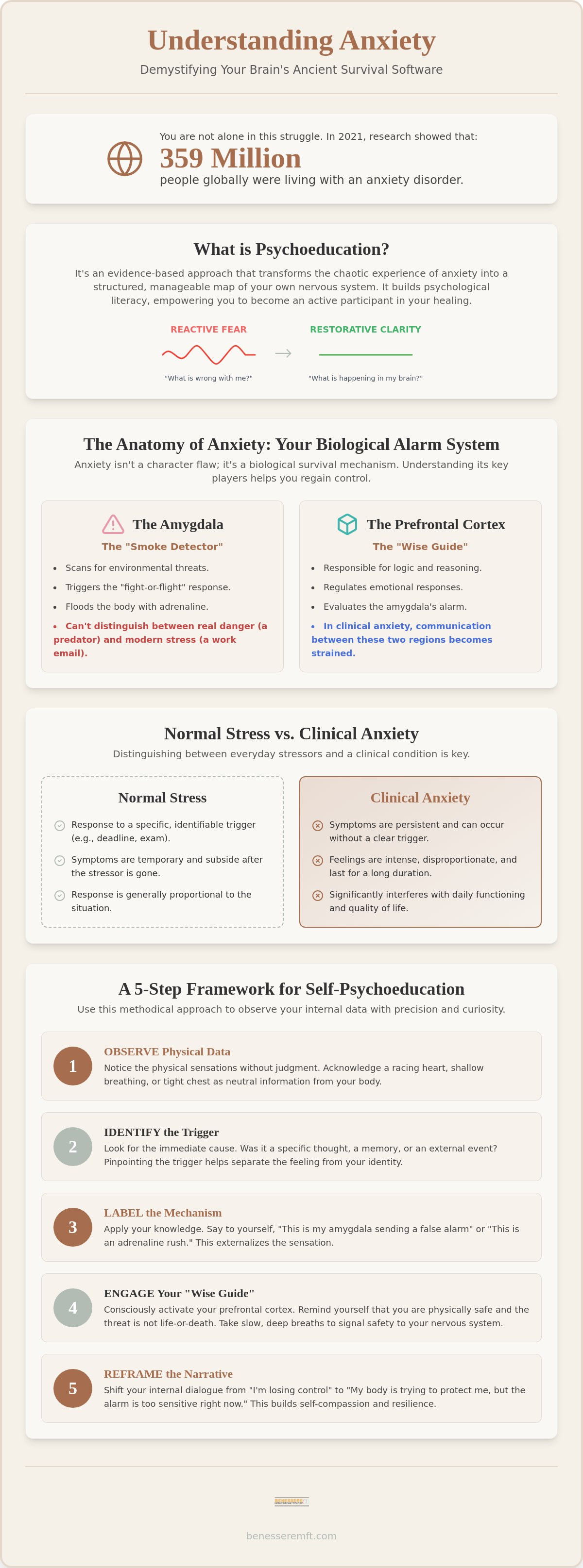
What if the racing heart and tightening chest you feel aren't signs that you're failing, but simply your brain's ancient survival software running an outdated program? When your pulse quickens without a clear cause, it's natural to feel "broken" or "weak," yet these physical responses are deeply rooted in your biology rather than your character. You aren't alone in this struggle; research shows that in 2021, 359 million people globally were living with an anxiety disorder, often feeling the same confusion between everyday stress and a clinical condition.
Understanding the science behind these reactions through psychoeducation for anxiety can be a profound turning point in your wellness journey. We'll explore how shifting your perspective from reactive fear to restorative clarity empowers you to regain a sense of agency over your own nervous system. This guide provides the practical tools to identify your specific triggers and the confidence to explore professional counseling in Roseville to further your growth. By demystifying the mechanics of your mind, we can move toward a space where you feel steady, informed, and deeply capable of change.
Table of Contents
What is Psychoeducation for Anxiety and Why Does it Matter?
Anxiety often feels like an uninvited guest that refuses to leave, creating a sense of internal chaos that can be deeply disorienting. Psychoeducation for anxiety serves as a restorative bridge, transforming this chaotic experience into a structured, manageable map of the human nervous system. It's a collaborative process where the practitioner’s clinical expertise meets the client’s lived experience, ensuring that the individual is never a passive recipient of care but an active participant in their own healing. By providing a clear framework, this approach fosters restorative clarity, moving the individual from a state of bewildered confusion to one of grounded understanding. Psychoeducation is an evidence-based intervention that empowers clients through psychological literacy. To understand the broader history and application of this practice, one can examine What is Psychoeducation? and how it serves as a cornerstone for modern mental health treatment.
The Therapeutic Power of Knowledge
When we understand the "why" behind our symptoms, something remarkable happens within our physiology. The simple act of labeling a sensation as a biological process rather than a personal failure can actually lower cortisol levels and reduce physiological arousal. This shift is profound. It moves the internal dialogue from "What is wrong with me?" to "What is happening in my brain?" This cognitive reframing is vital for long term recovery. To learn more about how this applies to various conditions, you can explore what is psychoeducation in therapy.
Knowledge also helps dismantle meta-anxiety, which is the "fear of the fear." This occurs when we begin to fear the symptoms of anxiety itself, noticing a racing heart and interpreting it as an impending heart attack or a loss of control. This secondary layer of fear creates a feedback loop that intensifies the original state. Psychoeducation breaks this cycle by providing the biological context for these sensations. When you know that your racing heart is simply your body preparing for action, the sensation loses its power to terrify you.
Psychoeducation as a Foundation for Evidence-Based Care
In our clinical practice, Roseville therapists prioritize this educational phase before engaging in more intensive trauma work. Establishing a common language and a shared understanding of the brain builds a robust therapeutic alliance, which is the cornerstone of successful outcomes. It provides a stable baseline for individual psychotherapy Roseville, ensuring that clients feel safe and supported as they navigate their internal landscapes. This foundational knowledge acts as an anchor, allowing individuals to approach their challenges with a sense of curiosity rather than dread. By grounding the therapeutic process in science, we remove the stigma often associated with mental health struggles. It's not about being weak; it's about having a highly sensitive nervous system that is doing its best to keep you safe.
The Anatomy of Anxiety: Understanding Your Biological Alarm System
To move toward a state of restorative clarity, we must first understand that anxiety is not a character flaw; it's a biological survival mechanism that has simply become overzealous. At the center of this experience is the amygdala, a small, almond-shaped structure that functions as the brain’s smoke detector. Its primary job is to scan the environment for threats. When it perceives danger, it sounds an alarm that triggers the "fight-or-flight" response, flooding your body with adrenaline to ensure your survival. However, the amygdala cannot always distinguish between a life-threatening predator and a stressful work email. This creates a "mismatched thermostat" effect, where your internal alarm system is set to a high-intensity response that feels wildly out of proportion to modern, non-lethal stressors.
While the amygdala sounds the alarm, the prefrontal cortex acts as the "wise guide" of the brain. This area is responsible for logic, reasoning, and emotional regulation. In a balanced state, the prefrontal cortex evaluates the amygdala's alarm and determines if the threat is real. In many cases of clinical anxiety, the communication between these two regions becomes strained. The smoke detector keeps ringing, and the wise guide struggles to be heard over the noise. Engaging in psychoeducation for anxiety helps you bridge this gap, providing the cognitive tools needed to help your prefrontal cortex regain its regulatory influence over your emotional responses.
The Nervous System and the Vagus Nerve
The physical sensations of anxiety, such as a racing heart, digestive upset, or shallow breathing, are logical biological outputs of your nervous system. Your Sympathetic Nervous System acts as the gas pedal, revving your body up for action, while the Parasympathetic Nervous System acts as the brakes, helping you return to a state of "rest and digest." Many people feel "broken" when they can't simply think their way out of these sensations. It's helpful to remember that these symptoms are evidence of a functioning, not a broken, survival system. Your body is doing exactly what it was evolved to do; it's just doing it at the wrong time. Learning to engage the vagus nerve through specific grounding techniques can help signal to your brain that the "threat" has passed, allowing your system to settle. If you find yourself stuck in a cycle of high arousal, exploring individual psychotherapy can provide a safe space to practice these regulatory skills.
Neuroplasticity: Can the Anxious Brain Change?
The brain is not a static organ; it's a dynamic, ever-changing system. This is the core of neuroplasticity, which is the brain’s inherent ability to forge new, calmer neural pathways through repeated experience and learning. When you consistently apply the insights gained from psychoeducation for anxiety, you're quite literally rewiring your stress response. This restorative process isn't instantaneous. It requires patience and a gentle persistence as you teach your brain that it no longer needs to live in a state of constant high alert. Over time, the pathways associated with calm and agency become stronger, while the reactive, fear-based pathways begin to quiet, leading to a more integrated and resilient sense of self.
Normal Stress vs. Clinical Anxiety: When to Seek Professional Support
Distinguishing between the healthy tension of a deadline and the paralyzing weight of clinical anxiety is a vital step in the restorative process. While situational stress is a temporary response to specific external pressures, clinical anxiety is characterized by its persistence and its tendency to bleed into every facet of life. Through psychoeducation for anxiety, we can establish a methodical framework for evaluation based on three pillars: intensity, duration, and interference. If your worry feels disproportionate to the situation, lasts for six months or longer, and prevents you from engaging in activities you once enjoyed, it may be time to transition from self-management to professional support.
Many individuals struggle with the internal objection that they "should just be able to handle this" on their own. This perspective often stems from a misunderstanding of functional impairment. Functional impairment isn't a sign of failure; it's a clinical indicator that your nervous system's alarm is stuck in the "on" position, making it nearly impossible to navigate daily responsibilities without significant distress. Choosing to seek help is an act of agency, not an admission of weakness. It's a recognition that your biological survival system requires professional recalibration to return to a state of balance.
Identifying the Tipping Point
The tipping point occurs when anxiety stops being a temporary motivator and begins to erode your quality of life. Situational stress typically resolves once the stressor, such as a major transition or a specific project, concludes. In contrast, generalized anxiety persists regardless of external circumstances. This chronic state often impacts physical health, work performance, and the depth of your personal relationships. It's also common for these feelings to overlap with other struggles. Many people seeking help for persistent worry also find value in depression counseling Roseville, as these conditions frequently co-occur and can reinforce one another in a distressing cycle.
Common Misconceptions About Anxiety
Misunderstandings about the nature of anxiety often prevent people from seeking the care they deserve. One prevalent myth is that anxiety is a sign of a character flaw. In reality, as we've explored, it's a biological over-activity of the brain's survival circuitry. Another common misconception is that avoiding triggers will eventually make the anxiety disappear. While avoidance provides short-term relief, it actually reinforces the fear cycle by teaching the brain that the only way to be safe is to run away. Breaking these cycles safely requires professional guidance and a structured, educational approach.
For Roseville residents wondering if it's time to reach out, consider this checklist:
Do physical symptoms like racing thoughts or palpitations occur even when there's no immediate stressor?
Has your worry interfered with your ability to perform at work or show up for your family?
Are you avoiding social situations or responsibilities to keep your anxiety at bay?
Have these feelings persisted for most days over the last several months?
How to Practice Self-Psychoeducation: A 5-Step Framework
Moving from a state of reactive fear to one of agency requires more than just abstract knowledge. It demands a methodical application of insights to your daily life. While understanding the amygdala provides the "why," practicing psychoeducation for anxiety gives you the "how." This five-step framework is designed to help you build a structured relationship with your internal experiences, turning overwhelming sensations into manageable information.
Step 1: Observe and Document. Begin by tracking the "data" of your anxiety. Instead of simply feeling "stressed," note the specific physical sensations, such as a tight jaw or shallow breath, and the accompanying thoughts.
Step 2: Label the Mechanism. Once you notice the sensation, identify its source. Ask yourself if your brain is sounding a "false alarm" based on past patterns or if there is a valid, immediate stressor that requires action.
Step 3: Question the Narrative. Apply early narrative therapy techniques to externalize the experience. This involves looking at the story you're telling yourself about the anxiety and reclaimed your role as the author of your life.
Step 4: Regulate the Body. Use physiological "brakes" to signal safety to your nervous system. Techniques like diaphragmatic breathing or progressive muscle relaxation help settle the sympathetic nervous system in real time.
Step 5: Review and Reflect. Look for specific patterns in your Roseville life. You might find that your anxiety peaks during the Highway 65 commute or before specific family gatherings, allowing you to prepare your toolkit in advance.
Externalizing Anxiety: You are Not Your Worry
A vital component of this restorative process is separating your identity from the symptoms you experience. You aren't "an anxious person"; rather, you are an individual experiencing a temporary biological over-activity. By giving "The Anxiety" a name or a persona, you reduce its power over your personal story. This act of externalization creates the space needed for restorative healing, allowing you to observe the mechanism without being consumed by it. It's much easier to manage a "false alarm" when you don't view it as a fundamental character flaw.
Building Your "Anxiety Toolkit"
Knowledge alone is rarely enough to create lasting change. The gold standard for recovery is the integration of knowledge plus consistent practice. This involves selecting evidence-based skills, such as mindfulness and grounding, that resonate with your unique nervous system. Over time, these practices strengthen the pathways in your prefrontal cortex, making it easier to stay grounded during moments of high arousal. If you find that self-study isn't quite enough to break the cycle, reaching out for individual psychotherapy can provide the professional guidance needed to refine your toolkit.
Integrating Education into Clinical Practice in Roseville
At Benessere MFT, we believe that understanding the "why" behind your distress is the first step toward lasting change. While self-directed study provides a vital foundation, psychoeducation for anxiety truly flourishes when it's integrated into a professional therapeutic relationship. In our practice, we utilize these educational insights as a core pillar of trauma therapy Roseville. This ensures that every individual possesses the psychological literacy needed to navigate their unique internal landscape. This collaborative approach honors your specific biology and personal history, moving beyond generic definitions to address the nuanced ways anxiety manifests in your daily life.
In your initial sessions, you can expect a safe, clinical space where your experiences are validated with both scientific precision and human warmth. We begin by identifying the specific mechanisms of your stress response, much like mapping a path through a dense forest. This isn't a lecture; it's an invitation into a collaborative process where we fine-tune your understanding of your brain's alarm system. By establishing this shared language early on, we create a sense of stability. This allows us to move from simply "learning about" anxiety to actively "working through" the underlying patterns that sustain a state of reactive fear.
A Collaborative Path to Resilience
The transition from self-help to professional psychotherapy represents a significant step toward reclaiming your agency. While books and worksheets offer valuable tools, a clinical expert provides the real-time feedback and nuanced adjustment that self-study cannot replicate. We help you distinguish between a valid survival response and a maladaptive habit, providing the steady guidance needed to rewire your nervous system. This partnership fosters a deep sense of resilience, empowering you to face future challenges with a calm, informed confidence. We encourage you to take this next step, moving toward a life defined by restorative clarity rather than constant worry.
Local Support for Roseville Families
Anxiety rarely exists in isolation; its ripples are often felt throughout the entire household. When one family member is in a constant state of high alert, it can shift the emotional climate of the home, leading to tension or disconnection. We recognize these systemic impacts and offer family therapy Roseville CA to help restore harmony and strengthen relational bonds. Finding a safe, clinical space in Placer County is the first step toward a more integrated and peaceful life for everyone involved. If you're ready to move from a state of fear to one of agency, Schedule a consultation at Benessere MFT to begin your restorative journey.
Reclaiming Your Story with Restorative Clarity
Moving from a state of reactive fear to one of grounded agency is a journey that begins with understanding. We've explored how your brain's biological alarm system works to protect you and how a structured 5-step framework can help you manage these responses in real time. By embracing psychoeducation for anxiety, you transform the confusing experience of worry into a clear map for restorative healing. This process isn't just about managing symptoms; it's about reclaiming the mental space needed to thrive.
While self-study is a powerful foundation, lasting change often requires a collaborative partnership. At Benessere MFT, we combine evidence-based clinical skillsets with deep expertise in Narrative Therapy to help you externalize your struggles and rewrite your unique life story. We're proud to provide compassionate, specialized care to the Roseville and Placer County community. You don't have to navigate this path alone; professional support is available to help you recalibrate your nervous system and find your way back to a sense of peace. Begin your journey to restorative peace with a personalized consultation at Benessere MFT. Your story is still being written, and there is always a path toward growth and stability.
Frequently Asked Questions
What is the main goal of psychoeducation for anxiety?
The primary goal is to empower you with psychological literacy, transforming your experience from one of reactive fear to one of informed agency. By understanding the biological mechanics of your stress response, you move away from the belief that you're "broken" or "weak." This foundation of knowledge allows you to collaborate more effectively with your therapist, turning abstract sensations into manageable data points that you can address with specific, evidence-based tools.
Can psychoeducation alone cure my anxiety?
Psychoeducation is a foundational intervention, but it's rarely a standalone cure for clinical conditions. It provides the essential "why" behind your symptoms, which significantly reduces the "fear of the fear," yet it's most effective when integrated with modalities like individual psychotherapy or trauma treatment. This combination allows you to move from simply understanding your brain's alarm system to actively rewiring the neural pathways that sustain chronic worry and distress.
How is psychoeducation different from regular talk therapy?
While traditional talk therapy often focuses on processing personal history and emotional experiences, psychoeducation is more didactic and structured in nature. It functions as a collaborative learning process where you gain specific facts about brain anatomy, the nervous system, and the mechanics of the stress response. This educational component provides the stabilizing framework you need to engage more deeply with the emotional processing and relational work found in broader therapeutic practices.
Is psychoeducation considered an evidence-based practice?
Yes, psychoeducation for anxiety is a rigorously established, evidence-based practice recognized by major clinical health organizations. It's often recommended as a foundational first step in treatment protocols because it creates the cognitive stability required for more intensive psychological work. By grounding your treatment in proven scientific principles, you can feel confident that your path toward restorative healing is built on a reliable, clinically sound foundation.
How long does it take for psychoeducation to start working?
You may experience a sense of relief almost immediately as you begin to understand that your symptoms are biological rather than character-based. This restorative clarity can lower your baseline stress level within the first few sessions. However, the process of rewiring the brain's habitual responses through neuroplasticity is more gradual. It typically requires consistent practice over several weeks or months to build lasting resilience and a more regulated nervous system.
Are there specific psychoeducation tools for children with anxiety?
Practitioners use age-appropriate metaphors and creative tools to help children understand their internal alarm system without feeling overwhelmed. This often involves personifying anxiety or using visual aids to explain how the body prepares for action. Because a child’s environment is so important, these tools frequently include parent education, ensuring the whole family unit can support the child in recognizing and regulating their emotional responses in a safe, validating way.
Where can I find a therapist in Roseville who uses psychoeducation?
You can find specialized support at Benessere MFT, where our clinicians integrate psychoeducation for anxiety as a core pillar of our restorative approach. We serve the Roseville and Placer County community, offering a safe, clinical space to explore the mechanics of your mental health. Our practitioners are skilled in translating complex psychological concepts into accessible, practical strategies that help you reclaim a sense of agency and stability in your daily life.
Does insurance typically cover sessions focused on psychoeducation?
Insurance providers typically cover psychoeducation when it's integrated into a comprehensive treatment plan for a diagnosed condition. Since it's an evidence-based component of individual or family therapy, it's billed under standard mental health procedural codes. It's always a good idea to verify your specific benefits with your provider, but you can generally expect these educational components to be recognized as a necessary part of your clinical care.



Comments