
Finding a Local Therapist in Roseville: A Comprehensive Guide to Personalized Mental Health Care
- Eddie Posadas
- Jul 2
- 12 min read

What if the most critical element of your healing isn't found in a list of credentials, but in the subtle resonance between your story and a clinician's approach? For many in our community, the task of finding a local therapist in Roseville often becomes an exercise in analysis paralysis. It's exhausting to sift through endless profiles while worrying about whether you're making a sound investment of your time and emotional energy. You deserve a search process that feels as restorative and intentional as the therapy itself.
We understand that seeking support should be grounded in both scientific precision and human warmth. This guide is designed to help you move past the confusion of insurance tiers and clinical acronyms so you can reclaim your sense of agency. We'll outline how to evaluate local expertise, understand the nuances of private pay benefits, and ultimately curate a shortlist of Roseville clinicians who are truly equipped to walk alongside you toward lasting resilience. By focusing on a match that respects your unique clinical needs, you can begin the transition from feeling overwhelmed to feeling heard.
Table of Contents
What Does It Mean to Find a Local Therapist in 2026?
In 2026, the process of finding a local therapist has evolved from a simple search for "counseling" into a quest for a specific clinical partnership. Modern Psychotherapy is no longer just a series of conversations about one's past. Instead, it's a collaborative, evidence-based relationship focused on restorative mental wellness and the integration of various life experiences. This shift represents a transition toward specialized clinical interventions, such as trauma-informed care, where the practitioner uses scientific precision to address complex emotional states. The goal of this guide is to move beyond temporary relief and work toward sustainable growth and resilience by empowering you with the psychological literacy needed to make an informed choice.
Choosing a clinician who is physically rooted in your community offers a layer of shared context that digital-only platforms cannot replicate. A therapist based in Roseville understands the specific professional and personal stressors inherent to life in Placer County. They know the rhythm of the local community, from the suburban transitions to the specific pressures of the regional workforce. This shared understanding creates a foundation of trust before the first session even begins, allowing the clinical work to proceed with a sense of cultural and geographic relevance.
The Value of Proximity in Mental Health Care
Physical proximity offers more than just a shorter commute. It provides a dedicated "safe space" outside of the home or office, which is psychologically significant for many clients. This neutral ground allows for a clear boundary between your daily responsibilities and your internal work. While many practices now offer hybrid models that include telehealth, the option for in-person sessions remains a cornerstone of restorative care. This flexibility allows you to balance the convenience of video sessions with the deep, grounded connection of a face-to-face clinical encounter when it's most needed.
Beyond the Directory: The Search for Clinical Authority
Many individuals experience "directory fatigue" after scrolling through hundreds of generic profiles that all seem to promise the same outcomes. A simple search often lacks the nuance required to distinguish between a general practitioner and a specialist in marriage and family therapy. This guide aims to transform you from a frustrated searcher into an informed client. By developing your psychological literacy, you can look past surface-level descriptions and identify the specific credentials and modalities that align with your clinical needs. Understanding the mechanics of your own healing process is the first step toward reclaiming your agency in the therapeutic journey.
Decoding the Credentials: LMFT, LCSW, and Clinical Specializations
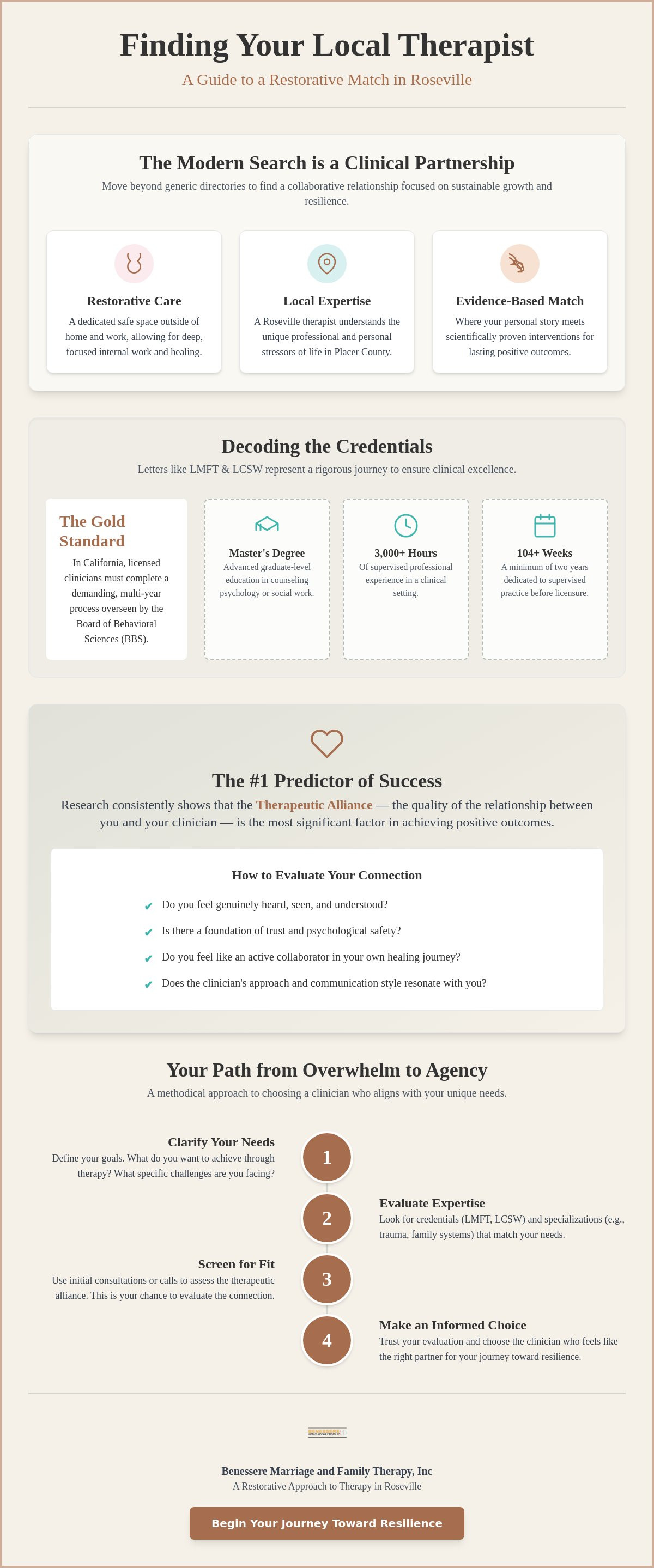
The process of finding a local therapist often begins with a search for letters like LMFT, LCSW, or LPCC. While these may seem like mere formalities, they represent a rigorous journey of clinical preparation designed to protect the public and ensure professional excellence. In California, becoming a Licensed Marriage and Family Therapist (LMFT) or a Licensed Clinical Social Worker (LCSW) requires a master's degree followed by 3,000 hours of supervised professional experience. This mandate, overseen by the Board of Behavioral Sciences (BBS), must be completed over a minimum of 104 weeks. It ensures that your clinician has been mentored through diverse clinical challenges before they ever sit across from you as an independent practitioner.
Evidence-based treatment serves as the gold standard for modern care. These modalities are grounded in scientific research, ensuring that the interventions used have been proven effective for specific mental health conditions. Within these frameworks, clinical studies frequently emphasize the importance of the therapeutic alliance as a primary driver of positive outcomes. Specialized training in areas like trauma or family conflict is often non-negotiable for complex cases. It provides the clinician with the precision needed to navigate deep seated emotional patterns that general counseling might overlook.
Understanding the LMFT: Experts in Relational Health
Licensed Marriage and Family Therapists are specifically trained to view mental health through a systemic lens. They look at how your relationships, family history, and environment influence your current internal state. While the name suggests a focus on couples, this relational expertise is equally vital in individual psychotherapy, as it helps you understand your role within the broader systems of your life. Under California law, LMFTs are authorized to perform psychotherapy that focuses on the interpersonal relationships and mental health of individuals, couples, families, and groups.
Specialized Skillsets: Trauma-Informed and Narrative Approaches
Clinical expertise often extends into specialized certifications that address your unique story. For instance, working with a trauma-informed therapist in Roseville ensures that your history is handled with the restorative care and scientific precision it requires. Additionally, narrative therapy offers a methodical way to deconstruct limiting beliefs and reclaim your sense of agency. These evidence-based skillsets provide a reliable roadmap for managing anxiety and depression. If you're ready to explore these specialized approaches, you might consider reaching out to Benessere MFT to discuss how these modalities can support your growth.
Evaluating the Therapeutic Alliance: Finding the Right Clinical Fit
The success of your mental health journey depends less on a specific technique and more on the clinical bond established between you and your practitioner. In the field of psychology, this is known as the therapeutic alliance. It is the most robust predictor of positive treatment outcomes, surpassing even the specific modality used. When finding a local therapist, you aren't just looking for a set of credentials; you're seeking a collaborative partnership where you feel safe enough to explore complex emotional terrain. This alliance is built on shared goals, a mutual understanding of the tasks required for growth, and a deep, restorative sense of trust.
With 414 mental health providers per 100,000 residents in Placer County as of 2025, the challenge isn't a lack of availability. Instead, the difficulty lies in sifting through options to find the specific clinician who resonates with your unique story. It's entirely normal to find that a highly qualified professional isn't the right fit for your personality or clinical needs. A therapist who acts as a Wise Guide provides a steady, non-judgmental presence that fosters security. This allows you to lower your defenses and engage in the methodical work of healing without the fear of being misunderstood or lectured.
Questions to Ask During Your Initial Consultation
Most practitioners offer a brief phone screening or consultation. This is your opportunity to move beyond surface-level information and evaluate their clinical philosophy. Consider asking the following questions to gain clarity:
"How much experience do you have specifically treating [your concern, such as PTSD or family conflict]?"
"Would you describe your style as more directive and educational, or do you take a more restorative, reflective approach?"
"What does a typical path toward resolution look like in your practice, and how do we measure progress?"
Signs of a Strong Clinical Connection
A strong connection often manifests as a sense of being truly heard and validated. You should feel that the therapist handles your story with scientific precision while maintaining human warmth. A sign of clinical excellence is the therapist's ability to explain complex psychological concepts in accessible, grounded terms. You don't need to be an expert in theory to understand your own treatment plan. If you leave a session feeling a sense of quiet optimism and a clear understanding of the next steps, you've likely found a clinician who can support your long-term resilience.
Navigating the Logistics of Therapy in Roseville and Placer County
The transition from deciding to seek support to actually sitting in a clinician's office involves several practical considerations that can sometimes feel overwhelming. Understanding the logistics of finding a local therapist is essential for creating a sustainable path toward healing. In Roseville, most professional practices operate within a structured framework designed to provide clarity and stability. This includes everything from the way sessions are timed to the method of payment, all of which are intended to respect both your time and the clinical depth of the work.
A standard appointment is typically referred to as a "clinical hour," which generally consists of 50 minutes of direct psychotherapy. This timeframe is scientifically designed to allow for deep emotional exploration while preventing the fatigue that can occur during longer sessions. When visiting a local Roseville practice, you can expect professional office environments that prioritize your privacy and comfort. Most local clinicians offer dedicated parking and accessible entries, ensuring that the physical act of arriving at your session doesn't add to your daily stressors.
Insurance vs. Private Pay: Making an Informed Financial Choice
Deciding how to fund your treatment is a significant step in securing professional mental health guidance. While many individuals look for providers within their insurance network, opting for a private pay or out-of-network model offers distinct clinical advantages. Private pay ensures a higher degree of confidentiality, as your records aren't subject to the oversight of third party insurance adjusters. It also removes the requirement for a formal mental health diagnosis, which some clients prefer for personal or professional reasons.
If you have a PPO insurance plan, you can often request a "Superbill" from your therapist. This is a specialized receipt that you submit to your insurance company for potential out-of-network reimbursement. This model allows you to choose a specialist based on their clinical expertise rather than their presence on a specific insurance list, giving you more agency in your healing process. Factors that influence these fees often include the clinician's years of experience, specialized certifications, and the intensity of the treatment provided.
Getting Started: The Intake Process
Once you've selected a clinician, the process begins with a formal intake. This typically involves digital paperwork that outlines practice policies and a comprehensive clinical assessment during your first session. This assessment isn't a test; it's a collaborative way for your therapist to understand your history and current challenges with scientific precision. Preparing for this first meeting involves a degree of emotional readiness and a willingness to be honest about your goals.
Consistency is particularly vital during the early stages of depression counseling in Roseville. Establishing a regular rhythm of sessions helps to build the therapeutic alliance and provides the stability needed to address complex emotions. If you're ready to begin this methodical journey toward resilience, you can contact Benessere MFT to schedule an initial consultation and discuss the logistics of your care.
Benessere MFT: A Restorative Approach to Therapy in Roseville
Benessere Marriage and Family Therapy, Inc. serves as a local center of clinical excellence for those seeking to transform their emotional well-being. Finding a local therapist is a search for a professional who can hold the complexities of your life with both scientific precision and restorative warmth. Our practice is built on the philosophy that human struggles are a normal part of the growth process. We provide a calm, safe environment where these struggles are met with deep-seated empathy and a commitment to evidence-based treatment. This methodical approach ensures that your healing process is grounded in proven psychological principles while remaining profoundly respectful of your individual story.
Our team prioritizes psychoeducation as a tool for empowerment. We believe that when you understand the mechanics of your mental health, you gain a greater sense of agency in your own recovery. This collaborative spirit defines every interaction at our Roseville office. We invite you to step into a space where your experiences are validated and where the path toward resolution is clearly defined and steadily guided. By bridging the gap between the practitioner and the reader, we create a foundation of trust that is essential for lasting change.
Personalized Care Tailored to Your Unique Story
Every clinician at Benessere MFT is mentored to provide interventions that are as unique as the individuals we serve. We don't believe in one-size-fits-all solutions. Instead, our treatment planning is a collaborative process where your personal narrative informs our clinical strategy. We focus heavily on helping clients identify and manage signs of clinical anxiety and the lingering effects of trauma. By integrating various life experiences into a cohesive plan for growth, we help you build the internal resources necessary to navigate future challenges with confidence.
Taking the Next Step Toward Resilience
Clinical psychotherapy at Benessere MFT goes beyond the scope of general counseling services. While counseling often focuses on immediate problem-solving, our restorative approach seeks to address the underlying patterns that influence your relational health and internal stability. This depth of care is what sets our practice apart. If you're ready to begin this unhurried journey, we encourage you to contact our Roseville office to schedule an initial appointment. Growth and healing are not just possibilities; they're the natural outcomes of a well-supported therapeutic process. We're here to walk alongside you as you reclaim your story and move toward a more resilient future.
Beginning Your Path Toward Restorative Growth
The journey toward mental wellness is rarely a linear path, yet it becomes significantly more manageable when grounded in clinical authority and shared community context. By prioritizing the therapeutic alliance and understanding the rigorous standards behind professional credentials, you move from a state of overwhelm to one of informed agency. Finding a local therapist in Roseville should feel like a deliberate step toward stability, where your unique story is met with the scientific precision of evidence-based care and the warmth of a restorative environment.
At Benessere Marriage and Family Therapy, Inc., we're dedicated to providing this high register of care through our specialized trauma and family conflict training. Our local Roseville office offers a safe space where holistic health and resilience are treated as achievable goals rather than distant ideals. If you're ready to transition from searching to healing, we invite you to schedule a consultation with our Roseville clinical team today. Growth is always possible when you have a steady, knowledgeable guide to walk alongside you.
Common Questions Regarding Mental Health Care in Roseville
How do I know if I need a therapist or just more self-care?
You might need professional support when your emotional state begins to interfere with your daily responsibilities, relationships, or physical health. While self-care is a vital practice for maintaining wellness, psychotherapy provides a methodical framework for addressing persistent distress or trauma. If your usual coping strategies no longer provide relief, seeking a clinician can offer the specialized interventions needed for restorative growth.
What is the difference between an LMFT and a Psychologist in California?
Licensed Marriage and Family Therapists (LMFTs) are trained with a focus on systemic and relational health, viewing challenges through the lens of family and social dynamics. Psychologists hold a doctoral degree and often specialize in psychological testing and the study of complex cognitive processes. Both are highly qualified to provide psychotherapy, though their clinical emphasis may differ based on their specific academic training and supervised hours.
Do I need a referral from my doctor to see a local therapist in Roseville?
Most private practices in Roseville don't require a physician's referral for you to begin treatment. When you're finding a local therapist, you can typically reach out to a clinician directly to schedule an intake assessment. However, if you're using certain HMO insurance plans, it's wise to check your specific coverage requirements, as some may necessitate a primary care referral for reimbursement purposes.
How long does a typical course of psychotherapy last?
The duration of treatment is a collaborative decision based on your unique clinical needs and goals. Some individuals find resolution for specific challenges within a few months of consistent sessions. Others may choose to engage in longer-term work to address deep-seated trauma or to foster ongoing resilience. Your therapist will regularly review your progress to ensure the treatment remains effective and aligned with your objectives.
Can I see a therapist for family issues if my family members won't join me?
Individual psychotherapy is an effective way to address family conflict even when other members aren't present. By working on your own relational patterns and boundaries, you can change the way you interact within your family system. This shift in your personal behavior often creates a ripple effect that can lead to broader systemic changes and improved household dynamics.
What should I do if I don't feel a connection with my therapist after the first session?
It's important to prioritize the clinical fit, as the therapeutic alliance is the strongest predictor of success. If you don't feel a sense of security or resonance after your initial meeting, it's perfectly acceptable to continue your search. Finding a local therapist who aligns with your story is a process that requires patience and honesty about your own comfort levels.
Are online therapy sessions as effective as in-person sessions in Roseville?
Clinical research indicates that telehealth is generally as effective as in-person sessions for treating a wide range of mental health conditions. Many Roseville residents appreciate the flexibility of video sessions, while others prefer the physical safe space of a local office. The choice often depends on your personal lifestyle and whether you feel more grounded in a face-to-face environment.
How much does a typical therapy session cost in Placer County?
Fees for mental health services in the Roseville area vary based on the clinician's experience, specialized certifications, and the type of treatment provided. Many practices operate as out-of-network providers, which allows for greater confidentiality and clinical freedom. It's helpful to inquire about a Good Faith Estimate during your initial consultation to understand the expected financial investment in your care.


Comments