
Coping with Trauma Symptoms: A Restorative Checklist for Healing

What if the very symptoms that feel like they're breaking you are actually evidence of your body's profound intelligence? It's exhausting to live perpetually stuck in a fight-or-flight state, where intrusive memories disrupt your work and family life while chronic hypervigilance leaves you physically depleted. You aren't failing at recovery. Instead, coping with trauma symptoms is a complex process of negotiating with a nervous system that's still working overtime to keep you safe from a past threat.
You deserve a path forward that honors your experience without leaving you overwhelmed. This article provides a restorative, evidence-based checklist designed to help you manage the emotional and physical impact of trauma with scientific precision and human warmth. We'll explore practical grounding techniques to stabilize your daily life and validate your responses as vital survival mechanisms. Finally, we'll outline a clear, professional trajectory toward trauma therapy in Roseville, ensuring you have the support needed to transition from mere survival into a state of lasting growth and resilience.
Table of Contents
Understanding Trauma Responses: How the Mind and Body Protect You
A Checklist for Grounding: Immediate Techniques to Manage Sensory Overload
Building Emotional Resilience: Restorative Strategies for Daily Stability
Addressing Common Obstacles: Why "Just Moving On" Isn’t Enough
Integrating Specialized Support: When to Seek Trauma Therapy in Roseville
Understanding Trauma Responses: How the Mind and Body Protect You
When you find yourself struggling, it's helpful to remember that trauma symptoms aren't evidence of a broken mind. They are the body’s adaptive response to extraordinary stress. Understanding Psychological trauma requires us to shift our perspective from asking "what is wrong with me?" to "how has my body learned to protect me?" While acute stress reactions often fade after a few weeks, long-term PTSD patterns represent the nervous system's inability to return to a baseline of safety. This persistence isn't a lack of willpower; it's a deeply ingrained physiological state.
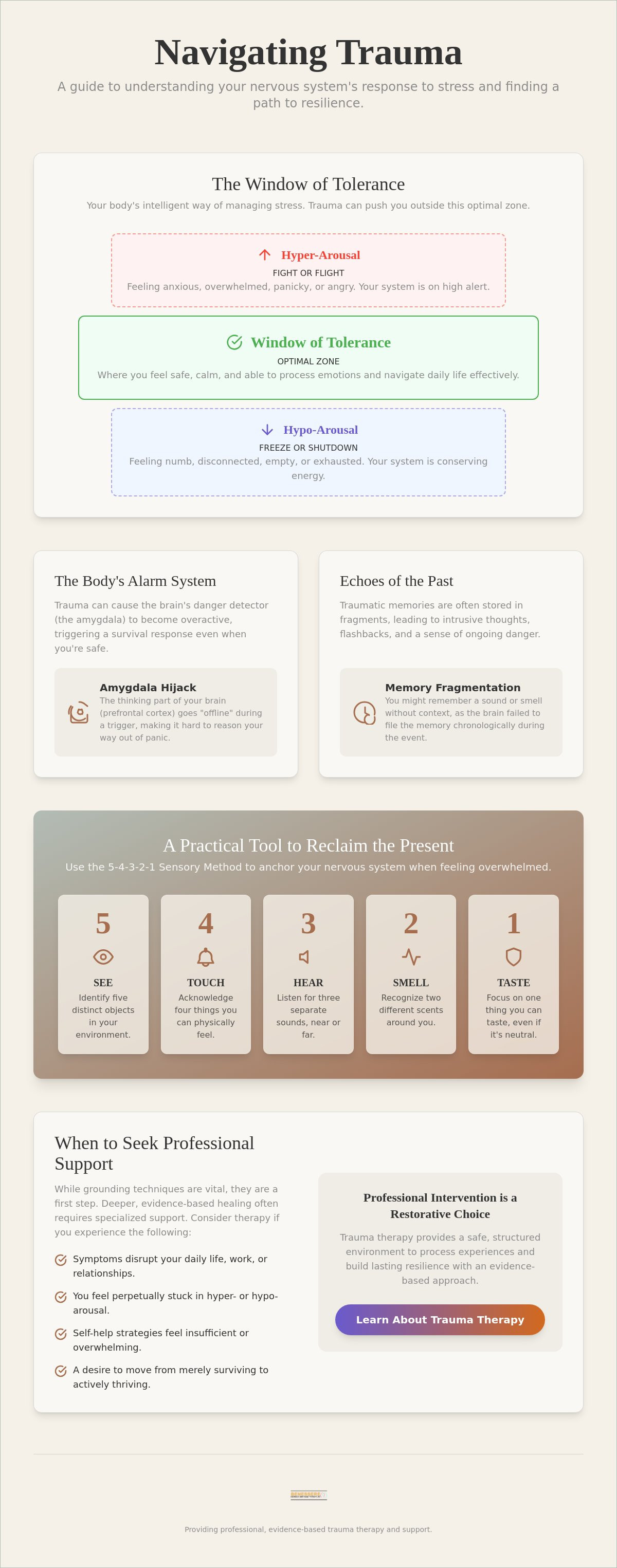
Central to this experience is the "window of tolerance." This clinical concept describes the zone where you can effectively process emotions and navigate daily life. Trauma often pushes the nervous system outside this window. You might find yourself in hyper-arousal, characterized by anxiety and panic, or hypo-arousal, which feels like numbness and disconnection. Coping with trauma symptoms involves learning how to gently expand this window and return to a regulated state. Recovery is rarely a linear path. It's a gradual process that requires both patience and professional guidance to ensure safety remains at the forefront of the healing journey.
The Biological Roots of Hypervigilance
Your brain contains a small, almond-shaped structure called the amygdala. Its primary job is to scan the environment for danger. When a traumatic event occurs, the amygdala enters a state of high alert that can become permanent. During a trigger, the nervous system prioritizes survival over logical thinking. This is often called an "amygdala hijack." You can't simply "think your way out" of a panic attack because the prefrontal cortex, the seat of reason, is temporarily offline. The physical toll is significant. Chronic spikes in cortisol and adrenaline can lead to profound exhaustion and digestive issues. Your body is essentially running an engine at redline for a race that ended long ago.
Recognizing Cognitive and Emotional Echoes
Trauma leaves behind echoes that manifest as intrusive thoughts, flashbacks, and emotional flooding. These aren't random occurrences. They are the mind's attempt to process fragmented information. During a crisis, the brain often fails to record memories in a chronological way, leading to memory fragmentation. You might remember a smell or a sound but lose the context of time. This fragmentation impacts your self-perception, often leading to a world-view that feels inherently unsafe or unpredictable. Coping with trauma symptoms means recognizing these echoes for what they are: survival mechanisms that are no longer serving your current reality. Validating these experiences is the first step toward restoration.
A Checklist for Grounding: Immediate Techniques to Manage Sensory Overload
Grounding serves as a vital physiological anchor when your nervous system feels hijacked by the past. When you're coping with trauma symptoms, the brain often loses its ability to distinguish between a memory and a current threat. Grounding techniques provide a biological stop signal to the amygdala by focusing your attention on the immediate physical environment. This shift helps move you from a state of reactive survival back into your window of tolerance. It's a methodical way to reclaim the present moment using the evidence of your senses.
A foundational tool in this restorative process is the 5-4-3-2-1 sensory method. This exercise forces the brain to engage with the external world through multiple channels, effectively quieting internal distress. Follow these steps slowly:
Identify 5 things you can see: Look for small details, like the pattern on a rug or the way light hits a wall.
Acknowledge 4 things you can touch: Notice the texture of your clothing or the coolness of a tabletop.
Notice 3 things you can hear: Listen for distant traffic, a ticking clock, or your own breathing.
Recognize 2 things you can smell: If no scents are present, recall the smell of fresh rain or coffee.
Focus on 1 thing you can taste: Take a sip of water or simply notice the lingering taste of your last meal.
Beyond sensory observation, you can actively stimulate the vagus nerve to signal safety to your heart and lungs. Try "extended exhalation," where you breathe out for twice as long as you breathe in. This practice slows the heart rate and encourages the parasympathetic nervous system to take over. For those times when you aren't at home, consider carrying a "safety kit." This can be a small pouch containing a smooth stone, a calming essential oil, or a textured fabric. These objects act as tangible reminders that you are physically safe and in control. Learning more about Coping with Traumatic Stress Reactions through clinical resources can further validate your journey toward long-term stability while coping with trauma symptoms.
Sensory Grounding for Emotional Flooding
When emotional flooding feels insurmountable, intense sensory input can interrupt the cycle. Splashing ice water on your face or holding an ice cube triggers the "mammalian dive reflex," which rapidly lowers your heart rate. Alternatively, the "weighted" approach uses physical pressure, such as a heavy blanket or firm self-hug, to provide the proprioceptive input your brain needs to feel secure. Grounding acts as a bridge between the traumatic past and the safe present.
Cognitive Anchoring Strategies
Cognitive anchoring engages the prefrontal cortex, the part of the brain responsible for logic. If you feel a trigger approaching, try the "categories" game: name as many types of dogs, trees, or cities as you can in one minute. This mental effort pulls resources away from the emotional centers of the brain. Pair this with "fact-checking" your environment. Remind yourself of the date, your location, and the fact that the danger has passed. Using self-soothing statements like "I am having a memory, but I am safe right now" allows you to acknowledge the past without being consumed by it. For those who find these self-directed tools difficult to implement alone, engaging in specialized trauma and PTSD treatment can provide the structured support needed to master these regulations.
Building Emotional Resilience: Restorative Strategies for Daily Stability
While grounding techniques provide immediate relief during a crisis, long-term stability requires the cultivation of a predictable and safe internal world. Establishing a consistent daily routine is a powerful clinical strategy. It signals to the nervous system that the environment is reliable and trustworthy. When you're coping with trauma symptoms, your brain often anticipates chaos. By creating small, manageable rituals, you provide your mind with the evidence it needs to feel secure. Building your resilience involves more than just "getting through" the day; it's about fostering wellness and finding purpose within your current circumstances.
An essential part of this restorative work is reclaiming "narrative agency." Trauma often fragments your sense of self, making you feel like a character in a story written by someone else. Through the lens of narrative therapy, you can begin rewriting your unique story and reclaiming agency. This process doesn't change what happened, but it shifts your relationship to the events. It allows you to move from being a victim of circumstances to an author of your own recovery. Resilience is also deeply tied to self-compassion. Shame is a common byproduct of trauma, often manifesting as self-blame for survival responses that were beyond your control. Replacing this inner critic with a voice of scientific precision and human warmth reduces the physiological burden of stress. It's okay to acknowledge that your body did exactly what it was designed to do to keep you alive.
The Role of Self-Care as a Clinical Tool
Sleep hygiene and nutrition aren't just lifestyle choices; they are foundational for emotional regulation. A well-rested brain has a much higher capacity to stay within the window of tolerance. Pacing is equally vital. This means learning to honor your body's need for rest without the weight of guilt. It's helpful to distinguish between healthy distraction, like reading a book to lower arousal, and harmful avoidance, which prevents the eventual processing of the experience. Coping with trauma symptoms requires a balanced approach to physical and mental health.
Establishing Internal and External Safety
Safety extends beyond physical surroundings to include your social landscape. Setting firm boundaries is a restorative act that protects your emotional energy from draining interactions. Identifying "safe people" who offer non-judgmental support helps create a community of care. As you practice these boundaries, you'll notice your window of tolerance slowly expanding. This growth is a sign that your nervous system is beginning to feel safe enough to explore life beyond the trauma. Restorative practices help you integrate various life experiences into a cohesive, resilient whole.
Addressing Common Obstacles: Why "Just Moving On" Isn’t Enough
Society often places an unspoken expiration date on grief and recovery. This myth suggests that after a certain amount of time, you should be "back to normal." In reality, coping with trauma symptoms is a non-linear process that respects no calendar. Healing isn't about forgetting what happened or erasing the past. Instead, it's about integration. Integration occurs when the traumatic memory is no longer a volatile, intrusive force but a part of your life story that you can hold without being consumed by it. Attempting to "just move on" without this integration often leaves the nervous system in a state of suspended animation.
The most common objection to seeking help is the fear of retraumatization. You might worry that discussing the event will force you to relive the pain. This is a legitimate survival instinct designed to protect you from further harm. However, professional support isn't about forced disclosure or being pushed into the deep end of your memories. It's about creating a controlled, safe environment where you can slowly process experiences at a pace your nervous system can handle. Avoidance, while useful for immediate survival, eventually shrinks your world. It acts like a temporary shield that, over time, becomes a cage, keeping the trauma alive by preventing the brain from ever learning that the danger has passed.
Navigating Shame and Self-Blame
Trauma often leaves a residue of unearned guilt. This is frequently driven by hindsight bias, where you judge your past self based on information you only have now. Survivor guilt is another common cognitive root. It's often the brain's way of trying to find logic in a situation that was inherently chaotic. Shifting from harsh self-criticism to curious observation allows you to see these feelings as symptoms of the event, rather than reflections of your character. Recognizing that your reactions were survival mechanisms is a restorative step toward self-forgiveness.
Breaking the Cycle of Avoidance
Avoidance patterns can be subtle and pervasive. They might look like staying constantly busy or avoiding certain places, people, or even specific emotions. While these actions feel like safety, they limit your resilience by preventing your brain from learning that the present is safe. Consider these signs of subtle avoidance:
Using work or constant chores to drown out internal thoughts.
Changing travel routes to avoid a neighborhood without a clear, logical reason.
Dismissing your own feelings as "dramatic" to avoid the discomfort of feeling them.
Isolating from supportive friends because their care feels too vulnerable.
Breaking this cycle requires a steady, guided approach that prioritizes your sense of security. If you find that avoidance is limiting your ability to engage with life, seeking specialized trauma and PTSD treatment can provide the professional framework needed to reclaim your freedom and expand your world once again.
Integrating Specialized Support: When to Seek Trauma Therapy in Roseville
The grounding and resilience strategies discussed in previous sections provide a vital foundation for daily stability. However, there are instances where the complexity of your experience requires the structured support of a clinical environment. Coping with trauma symptoms effectively often involves recognizing when your internal resources are stretched beyond their current capacity. Certain clinical red flags indicate that it is time to transition toward professional intervention. These include persistent dissociation, a chronic inability to maintain work or family obligations, or physical exhaustion that does not resolve with rest. When your nervous system remains in a state of high alert despite your best efforts at self-regulation, specialized care becomes the most restorative path forward.
At Benessere MFT, trauma therapy in Roseville utilizes evidence-based skillsets to help you process experiences that feel perpetually stuck in the present. This professional approach goes beyond simple conversation; it employs precise psychological tools designed to recalibrate the body's response to past stress. Engaging in PTSD treatment in Roseville, CA offers significant benefits for your long-term health by reducing the chronic physiological strain caused by hypervigilance. In a trauma-informed session, you'll encounter a collaborative space where your story is handled with scientific precision and profound respect for your individual pace. We prioritize your sense of security above all else, ensuring that the therapeutic process remains a safe harbor for growth.
The Clinical Path to Healing and Resilience
Trauma-informed care is defined by four essential pillars: safety, choice, collaboration, and trust. These principles ensure that you remain the author of your own recovery throughout the process. Through individual psychotherapy in Roseville, we tailor our clinical strategies to the unique echoes of your history. We don't just focus on the reduction of distress. Our goal is to facilitate a transition from a state of "surviving" into a state of "thriving," where your experiences are integrated into a resilient, cohesive sense of self. This transition allows you to reclaim the energy previously spent on survival and redirect it toward your personal aspirations.
Finding Local Support in Placer County
Accessing high-quality care should be a straightforward process for those living in Roseville, Rocklin, and Granite Bay. We encourage you to seek practitioners who prioritize psychoeducation and agency, providing you with the knowledge needed to understand your own nervous system. Coping with trauma symptoms is a journey that benefits deeply from a steady, guiding presence. If you're ready to explore a restorative path to wellness, we invite you to reach out for a consultation. Together, we can build a clear trajectory toward the stability and peace you deserve.
Reclaiming Your Path Toward Restoration and Growth
Healing from the impact of extraordinary stress is a profound undertaking that requires both clinical precision and human warmth. By understanding your body's survival responses and utilizing grounding tools, you've already begun the work of stabilizing your nervous system. You now recognize that your symptoms are adaptive mechanisms rather than signs of personal failure. Reclaiming your narrative agency and building daily resilience are the next steps in moving beyond a state of survival. Coping with trauma symptoms is a journey that doesn't have to be walked in isolation. Recovery is a collaborative process.
When you're ready for deeper integration, professional support provides the safety and structure necessary for lasting change. We offer specialized trauma and PTSD training and utilize evidence-based clinical skillsets to guide your recovery. Our team is dedicated to providing compassionate, local care in Roseville within a space that honors your unique story. Take the first step toward restorative healing with a trauma-informed consultation at Benessere MFT. You possess an inherent capacity for growth, and we're here to help you rediscover your sense of security and potential.
Frequently Asked Questions
Is it normal to still have trauma symptoms years after an event?
Yes, it's common for the nervous system to remain in a state of high alert long after the actual danger has passed. Trauma is not typically stored as a chronological memory but as a physiological "now." Without restorative integration, these echoes can persist for decades. This persistence is a sign that your survival system is still trying to protect you from a threat it perceives as ongoing.
How can I tell the difference between normal stress and PTSD?
While stress is a reaction to a current pressure, PTSD involves the re-experiencing of past events as if they are happening in the present. If your reactions include intrusive flashbacks, chronic avoidance, or a persistent sense of being on edge that disrupts your daily functioning, it may indicate PTSD. Stress usually dissipates once the external pressure is removed, whereas trauma symptoms remain active regardless of your current circumstances.
What should I do if I have a flashback in a public place?
Focus on immediate sensory grounding to anchor yourself in the current environment. Try the 5-4-3-2-1 method mentioned earlier or firmly press your feet into the ground to remind your brain of your physical location. If possible, move to a quiet area and use extended exhalations to signal safety to your heart and lungs. These actions help interrupt the emotional flooding and return you to the present moment.
Can trauma symptoms manifest as physical pain or illness?
The body frequently holds the physical burden of psychological distress through chronic tension, digestive issues, or unexplained pain. When you're coping with trauma symptoms, your body remains in a state of hyper-arousal, which keeps cortisol and adrenaline levels elevated. This physiological strain can weaken the immune system and lead to somatic symptoms that require a holistic, trauma-informed approach to resolve effectively.
Will I have to talk about the traumatic event in detail during therapy?
You are never forced to disclose specific details before you feel ready or safe enough to do so. Trauma-informed therapy focuses on stabilization and regulation before processing any memories. Many modern approaches allow for healing without requiring a step-by-step recount of the event. The process is collaborative, ensuring you remain in control of your narrative and the pace of the work at all times.
How do I support a family member who is coping with trauma symptoms?
Offer a steady, non-judgmental presence that prioritizes their sense of safety and agency. Avoid pushing them to talk or move on before they're ready. Instead, validate their experience as a survival mechanism and offer practical support during moments of overwhelm. Educating yourself on the mechanics of the nervous system can help you respond with scientific precision and human warmth when challenges arise in your relationship.
Are there local support resources for trauma in Roseville, CA?
Residents of Placer County have access to specialized care designed to meet the unique needs of the local community. Beyond private practices, organizations like the Placer County Network of Care provide information on community mental health services. Seeking local expertise ensures that your support system is accessible and attuned to the specific environment of Roseville, Rocklin, and Granite Bay, fostering a sense of community connection.
What is the first step to starting trauma therapy at Benessere MFT?
The first step is to reach out for a restorative consultation to discuss your needs and goals. During this initial contact, we'll explore how our evidence-based clinical skillsets can support your unique story. This collaborative beginning allows us to establish a foundation of trust and safety before beginning any formal treatment. It's a steady, guiding transition into a therapeutic process designed to help you move from survival to growth.



Comments